News & Media Highlights
Current Happenings
Sept 2026- Welcome new graduate student Valerie Miller! Val joins the Turo lab after graduating with her BS from UMass-Lowell. She has extensive experience with Arc-GIS and using landscape patterns to inform conservation approaches. We’re excited to have her join our group!
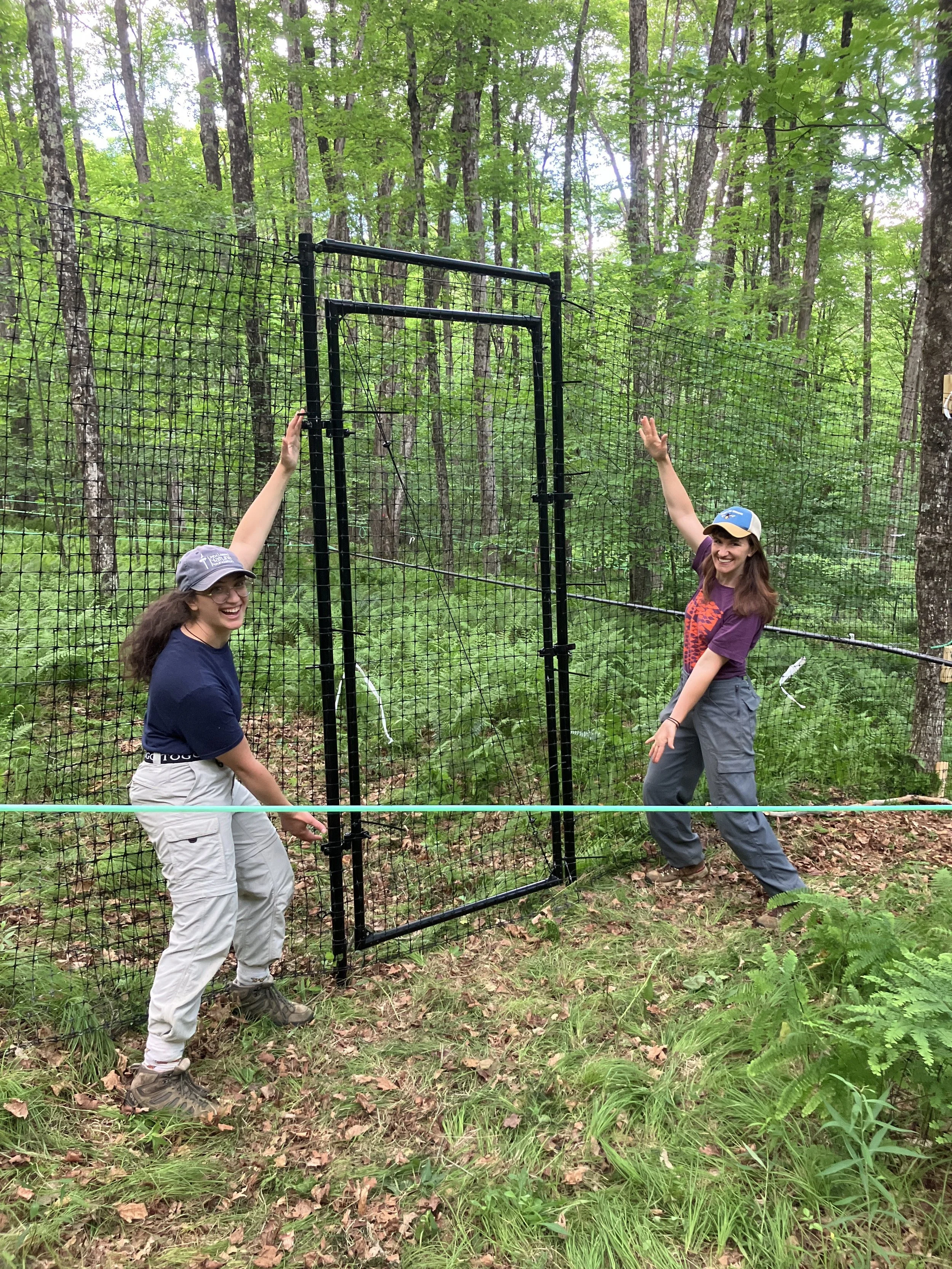
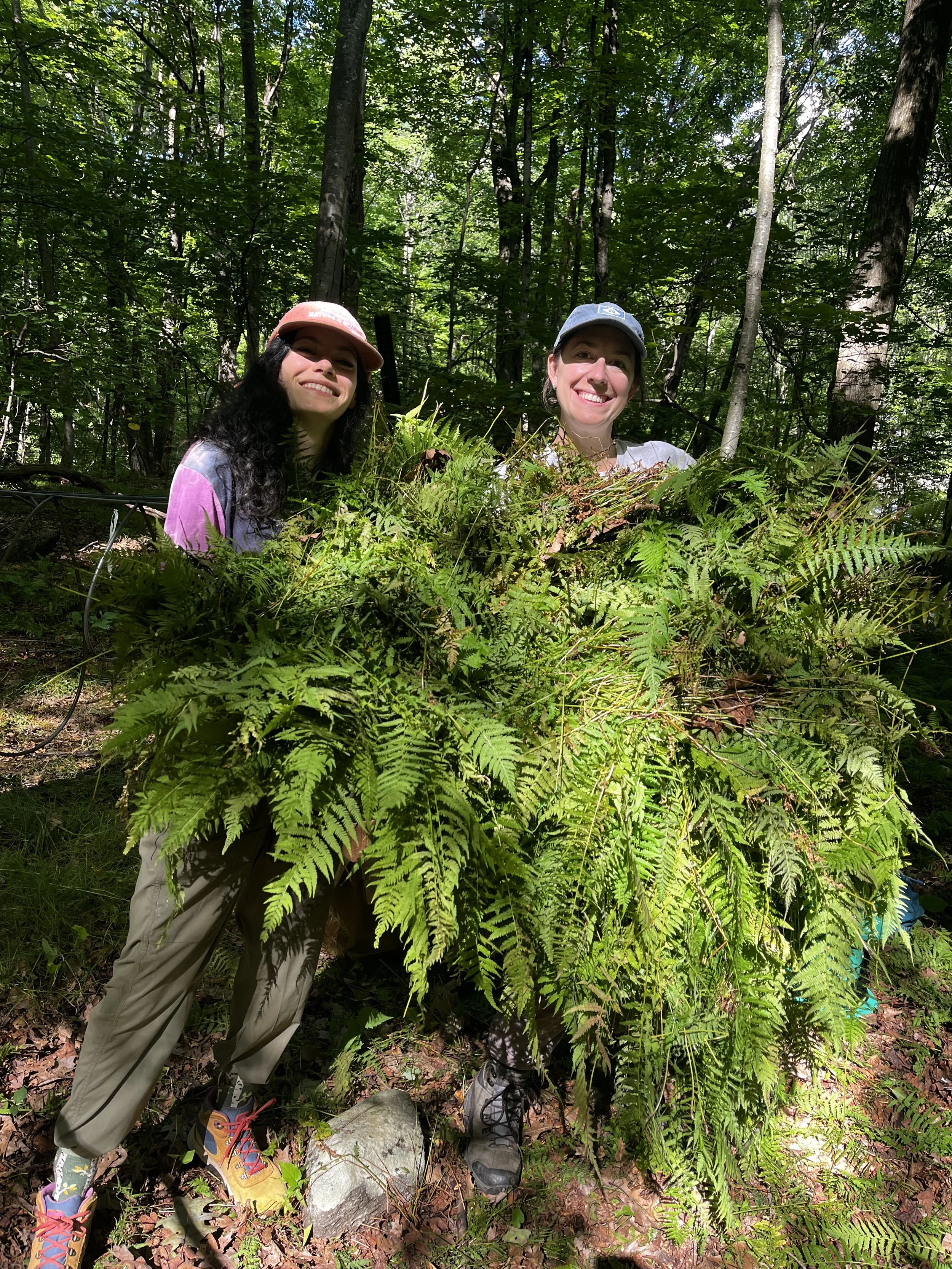
Summer 2026- Work continues on our NSF PACSP project! Over the summer, our collaborators at the Xerces Society have been hard at work putting deer fences up at our research sites and getting prepared for Fall understory plantings. This Fall, we will plant ~300 plugs of native plants per site.
Left Jenny (field tech) and Kass Urban-Mead (Xerces Society) put up a deer fence Right Rachely (grad student) and Katie (PI) prepare a site by weeding hay-scented fern
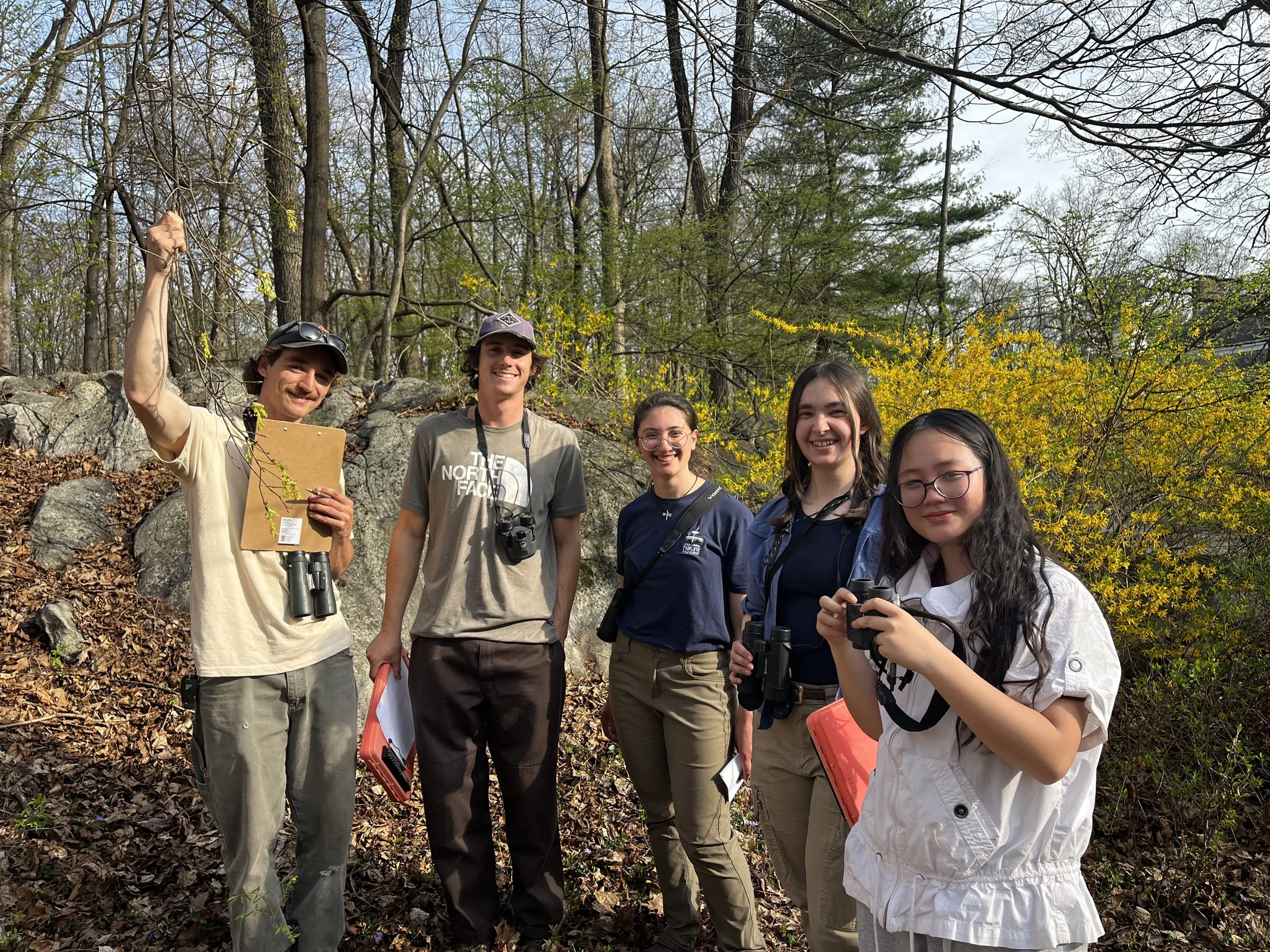
Spring 2026- Another successful field season in the books. We’re so grateful to our amazing technicians (Left to Right: Mickey, Colby, Jenny, and Isabelle) and student volunteer (Elena) who have been traveling across the Finger Lakes and Hudson Valley setting pan traps, netting bees, and collecting covariate data on trees, flowers, and coarse woody debris. Update: 7,000 bees and counting!
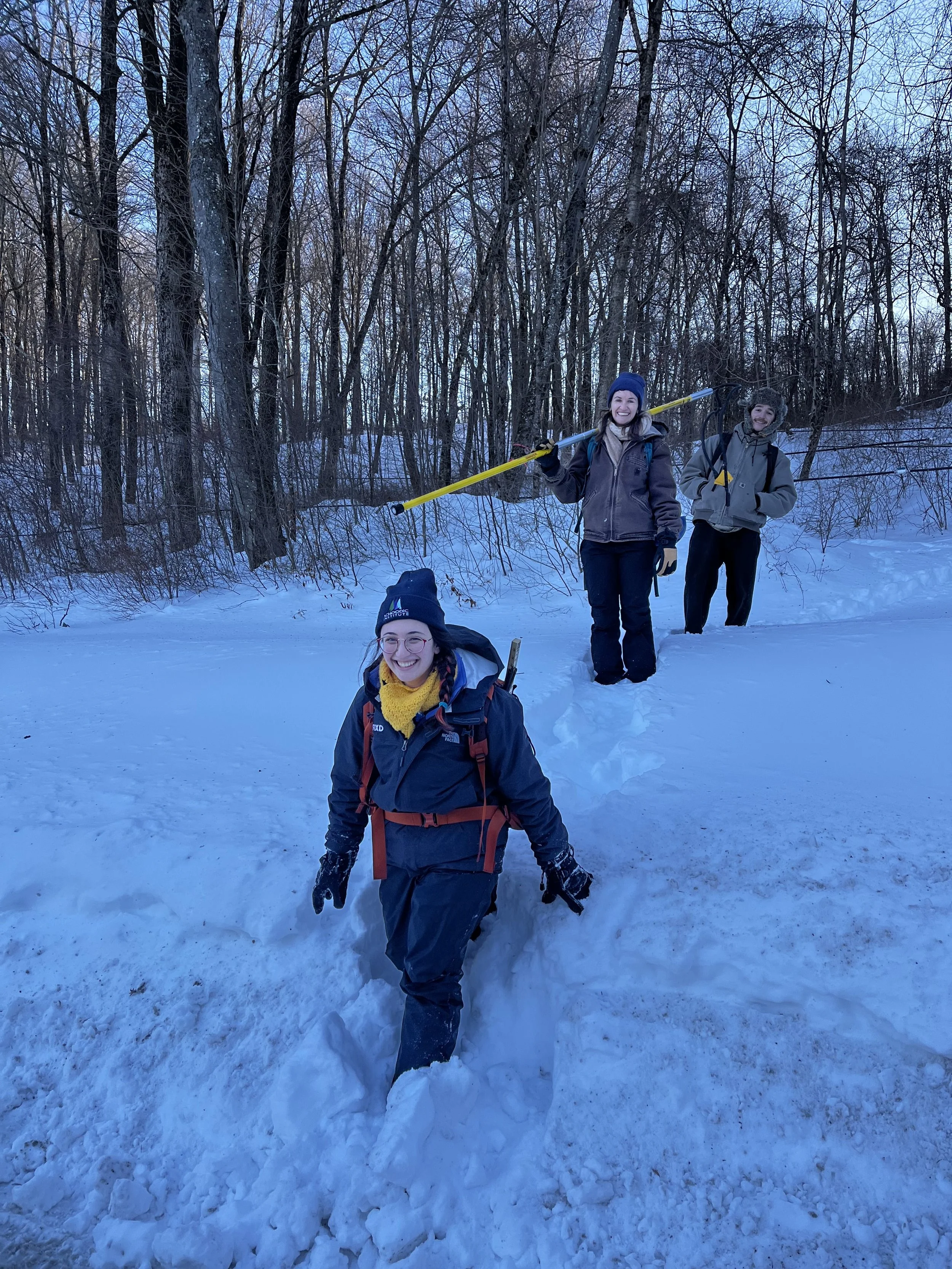
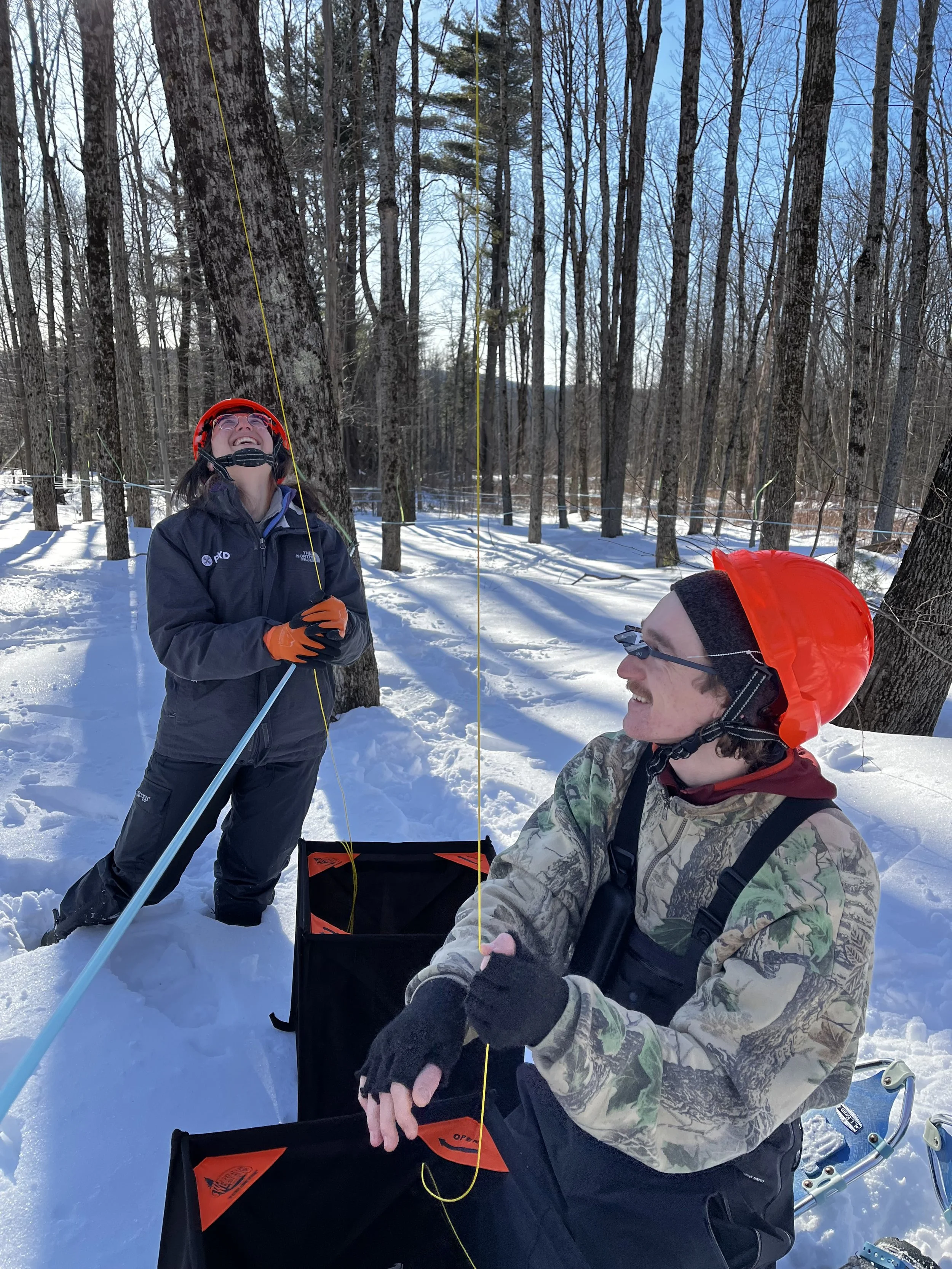
Winter 2026- It’s atypical for bee scientists to need snowshoes but studying spring-flying bees results in some wintery field preparation. Scenes from snowpocalypse.
Fall 2025— More good news, over the next five years the Turo Lab (Fordham) will continue to work with the Winfree Lab (Rutgers) and the Xerces Society for Invertebrate Conservation on a newly funded conservation grant through the “Partnership to Advance Science Conservation and Practice” (PACSP). See Join for more details on available positions.
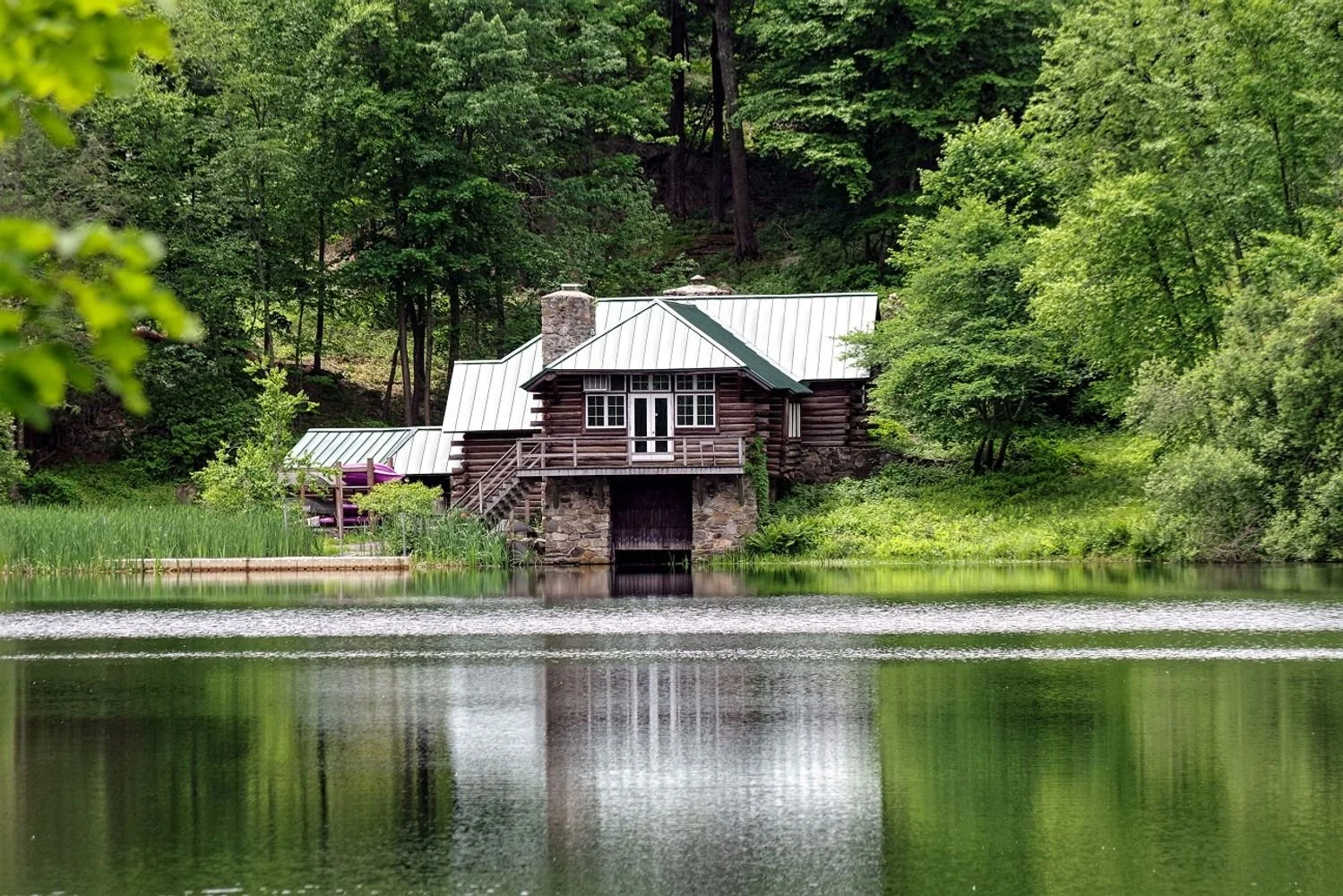
April 2025— Thrilling news to share, Katie was offered an Assistant Professor position in the Department of Biological Sciences at Fordham University and will be based at the Louis Calder Center — a beautiful estate turned biological field station that is only a train ride into NYC. (See Lakeside Lodge teaching space below)
Interested students should reach out by email as the Turo lab will be accepting students for Fall 2026. FYI there is graduate student housing available at the field station.
December 2024— We have finished pinning our 2024 bee collections! This is a herculean effort with many junior scientists to thank. At the Yale Myers Forest, we collected 12,300 bees with understory and canopy traps. Through our “Loop” project, we collected 7,439 bees from ground-floor pan traps in clearcuts, shelterwoods, and unharvested forests of New England. Preliminary results suggest smaller timber harvests in forested landscapes create landscape-scale diversity and benefit bees. Stay tuned to see if this holds true!
May 2024— Our manuscript on global pollinator limitation in crops was officially accepted by Nature Ecology and Evolution (Katie lead author)! Excited to see this finally in print. Update: Paper is now available online, full text version here! And, blogpost summary.
April 2024— Fieldwork season is underway: We have four technicians and 1 Winfree lab graduate student, Joanna Greenwood, who will be staying at the Yale Myers Forest Camp throughout the spring and collecting forest bees throughout CT, MA, NH, VT, and ME. That’s a lot of drive time for our regional study on pollinators in working forests! We’ll be testing the effects of shelterwood vs. clear cut timber harvesting on forest bee communities and their foraging.

2024 Field tech, Rowan Macy, hikes out to one of our VT research sites in the Green Mts.
December 31 2023— Our newest honorary lab member, Nolan Day Turo, was born just in time to ring in the new year! Katie will be on parental leave until the start of spring.
November 2023— Katie and 2 Winfree lab graduate students, Dylan Simpson and Max McCarthy, presented at the Entomological Society of America conference in National Harbor, MD.


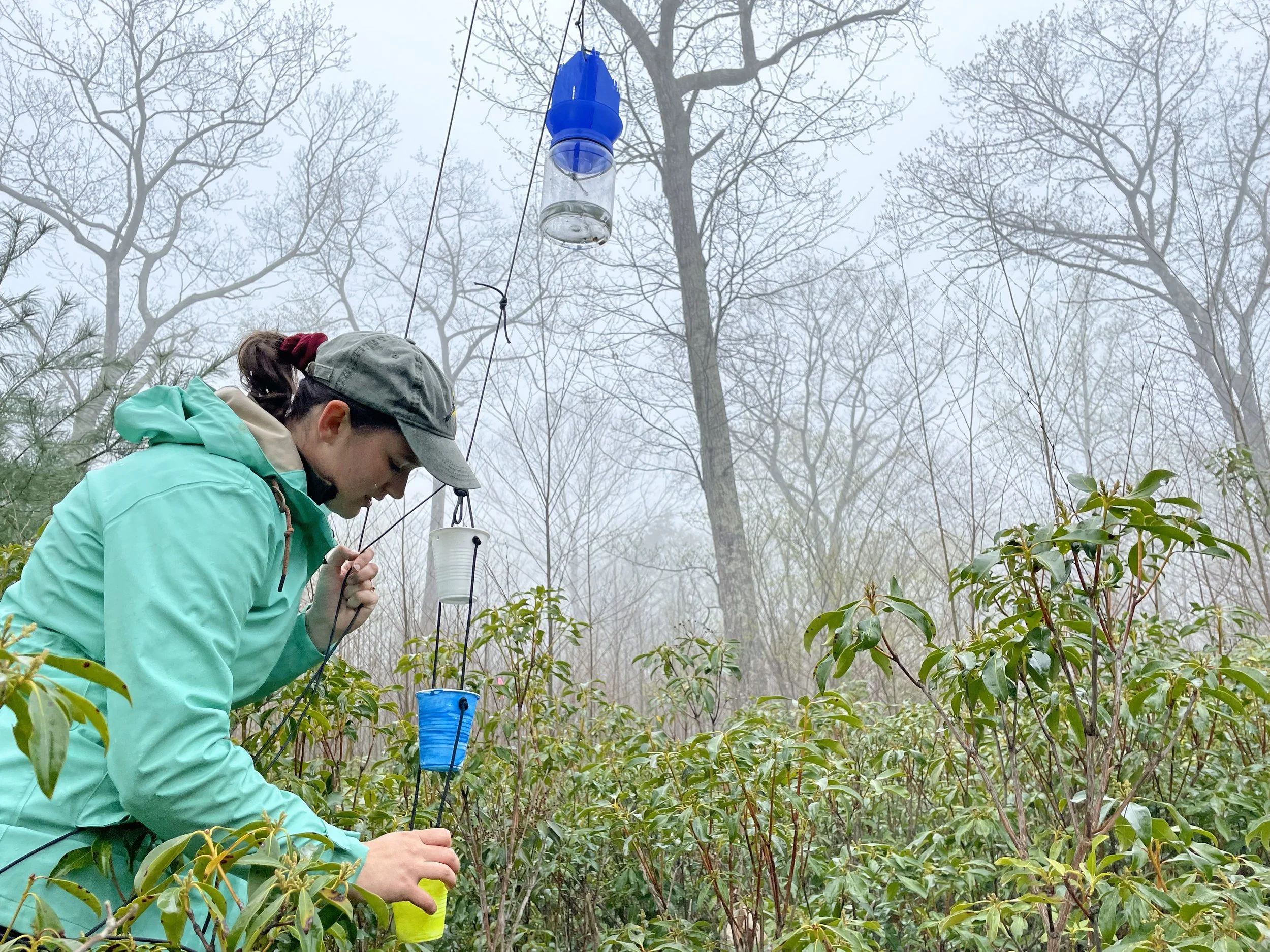
June 2023— And, that’s a wrap on our first year of sampling at the Yale Myers Forest! We’re all very curious to see if our hanging canopy traps caught different species than on our understory traps. Watch the video at right for a sneak peek on how we check our traps every 10-14 days. Update: We caught over 12,000 individual bees— stay tuned as we sift through this huge collection and identify species !
April 2023— Although based in New Jersey at Rutgers University, our research keeps heading northward into the deciduous forests of New England. Joanna Greenwood (picture at left) and Katie are now partnering with the Yale Myers Forest in Connecticut for a 2 year study on forest-associated bees within managed forests. Since 1992, Yale has harvested one 6-8 hectare plot of land and then left this land to undergo stand development. We’ll be using this chronoseries to test how forest bee communities respond to stand development following a shelterwood harvest.
Dec 2022— Katie attended the British Ecological Society Annual Meeting in Edinburgh, Scotland! Here’s hoping our results on global patterns of pollinator limitation will attract interest from the international crowd.
Aug 2022— The whole Winfree lab is travelling to Montreal for our first “post-covid” Ecology Society of America meeting. Lots of excitement and energy about meeting other scientists in person! (Update: most of us got Covid at the meeting lol)
April 2022— Katie’s paper in Journal of Applied Ecology was shortlisted for the Southwood Prize for the best paper in 2021 by an early career researcher.
March 2022— Sam Wilhelm and Joe Giulian join the Turo forest bee research team! The bees in NJ are already out foraging in March (and will probably be flying earlier each year with climate change…). Our goal is to collect foraging females from spring forests throughout NJ. We’ll then be washing the pollen off individual bees and analyzing their foraging with pollen metabarcoding. (Picture of an end of season kayak trip/celebration)

Nov 2021— Thanks to the Comstock Award for excellent graduate students, Katie attended the Entomological Society of America conference in Denver, CO.
Sept 2021— Katie joins the Winfree lab at Rutgers University! Postdoc fellowship and research funding provided by USDA NIFA.
Media Highlights

Utah Public Radio
UnDisciplined: City-Living Bees


